

















Heavy Duty Anchors for Structural and Industrial Applications
The Role of Heavy-Duty Anchors in Modern Construction
In concrete and structural engineering, heavy-duty concrete anchors are essential for transferring significant static and dynamic loads safely into concrete. These mechanical and post-installed fasteners form a critical link between structural components and the concrete substrate, ensuring long-term performance under tension, shear, and cyclic forces.
From bridge reinforcement to tunnel lining systems, machinery baseplates, or façade substructures, choosing the correct heavy-duty anchor—and installing it in accordance with relevant standards, directly affects structural reliability and safety.
Types of Heavy-Duty Anchors
Heavy-Duty Concrete Screws
Heavy-duty concrete screws (or “concrete self-tapping anchors” such as the EJOT JC2 and JC6 ranges) cut their own thread into the base material. They provide immediate load transfer without expansion pressure, allowing reduced edge and spacing distances. They are increasingly used for temporary or adjustable fixings where removability and re-usability are advantageous.
Wedge Anchors
Traditional metal heavy-duty anchors use expansion sleeves that exert outward pressure on the concrete walls. Their torque-controlled mechanism provides secure anchoring for support brackets, racking, or safety barriers, offering high reliability under static loads.
High-Performance / Post-Installed Anchors
Post-installed heavy-duty anchors, such as mechanical expansion anchors and chemical bonded anchors, are fitted into pre-drilled holes after the concrete has cured. Their ability to deliver consistent load performance in retrofit and upgrade projects makes them essential for infrastructure refurbishments and plant installations.
Stainless-Steel Concrete Anchors
For environments exposed to moisture, chemicals, or chlorides—such as marine structures, tunnels, or wastewater treatment plants—stainless steel concrete anchors provide enhanced corrosion resistance and longevity.
Applications for Heavy-Duty Anchors
Heavy-duty anchor bolts for concrete are specified in a wide range of structural and civil engineering applications:
- Bridge and viaduct reinforcement: transfer of shear and tension loads through expansion or undercut mechanisms.
- Tunnel and mining construction: reliable fixation of support rails, electrical infrastructure, and service systems.
- Industrial machinery & process plants: anchoring dynamic equipment and baseplates to concrete foundations.
- Lift installations and shafts: secure fixing for guide rails, counterweights, and safety devices.
- Energy and utility infrastructure: anchoring of wind turbine towers, solar structures, and pipe supports.
- Façade engineering: fixing secondary structures to concrete cores while managing thermal expansion and building movement.

Benefits of Heavy-Duty Anchors
- High load capacity: engineered to withstand static, dynamic, and seismic stresses.
- Design compliance: qualified under European Technical Assessment (ETA) and EN 1992-4 for concrete fastenings.
- Versatility: available in torque-controlled, deformation-controlled, and bonded configurations for cracked and non-cracked concrete.
- Durability: stainless steel and hot-dip galvanized options extend service life in aggressive environments.
- Precision and predictability: torque-controlled installation ensures consistent performance and measurable preload.
- Adaptability: post-installed anchors simplify retrofitting and upgrade works without compromising concrete integrity.
Heavy-Duty Anchors vs Concrete Undercut Anchors (LIEBIG®)
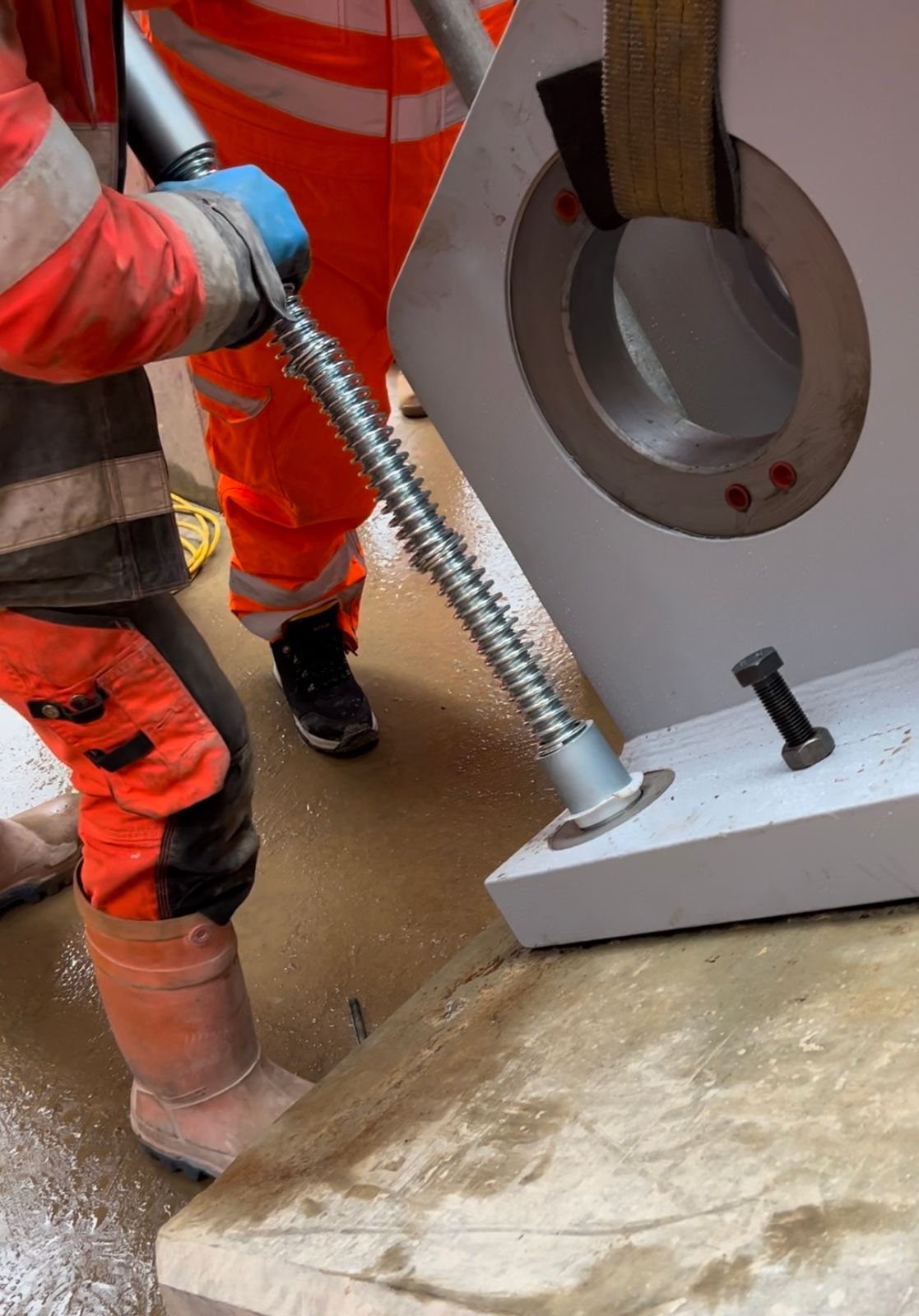
LIEBIG® heavy-duty undercut anchors such as the LIEBIG Ultraplus are engineered for superior shear and tension resistance under dynamic loading. Their positive mechanical interlock avoids reliance on friction, making them the anchor of choice for critical civil and infrastructure applications.

Installation and Design Considerations
- Utilising correct design programs (such as Anchorfix) at the conceptual stage of the process.
- Check substrate class and condition — confirm concrete strength (C20/25 or above) and crack status.
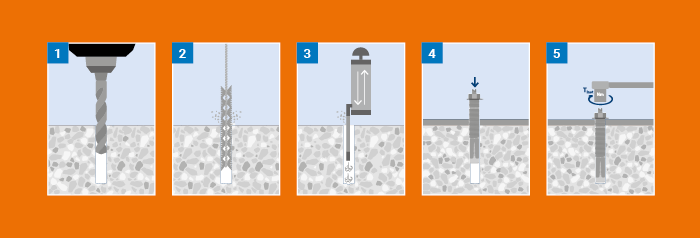
- Follow manufacturer’s drilling parameters — diameter, embedment depth, and cleaning procedure.
- Ensure proper torque application — over- or under-torquing affects expansion and load capacity.
- Respect edge and spacing distances — to avoid concrete spalling or breakout.
- Use anchors with relevant ETA approval — particularly for safety-critical or seismic applications.
- Inspect anchors post-installation — verify torque, embedment, and environmental protection measures.

Relevant Standards and Guidance
- EN 1992-4: Design of fastenings for use in concrete.
- EAD 330232-00-0601: Mechanical anchor systems for use in concrete.
- ETAG 001 Annex C: Evaluation of anchor performance.
- TR 045: Design of fastenings under seismic actions.
- EN ISO 3506: Corrosion-resistant stainless steel fasteners.
These standards form the design and verification framework for both traditional expansion anchors and LIEBIG® undercut systems.
Featured Product in this article
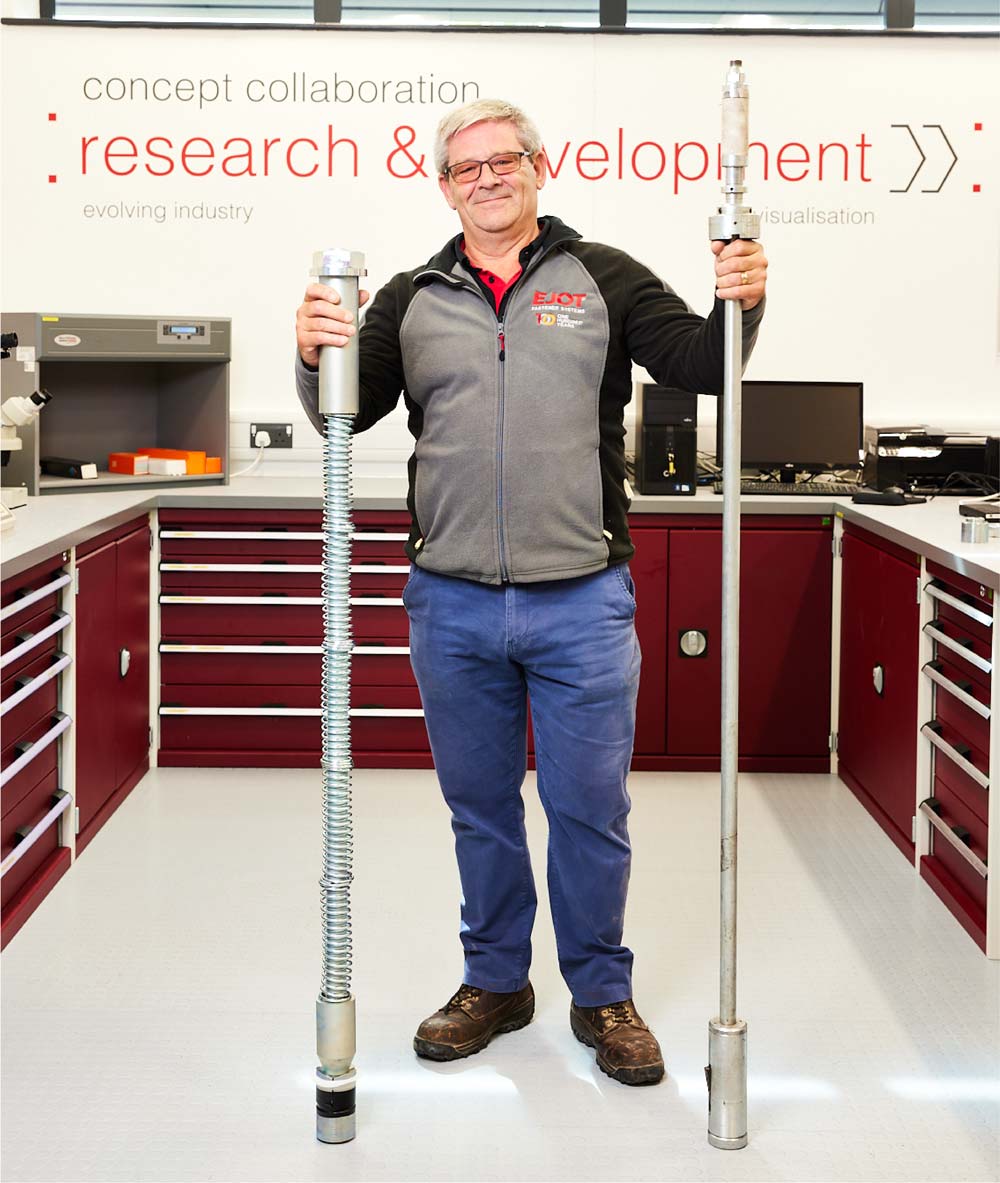
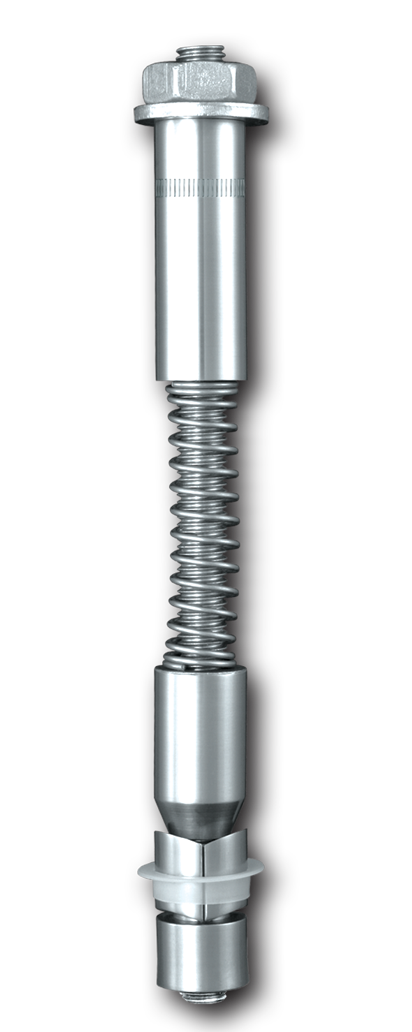
Ultraplus
- Anchoring of Steel Structures and Baseplates in Nuclear Power, Oil, Gas and Water Treatment.
- Heavy Structural Applications.
- ETA Approved for Cracked and Non Cracked concrete
Frequently Asked Questions
What is a heavy-duty anchor used for?
Heavy-duty anchors secure structural components, equipment, or safety systems to concrete where high tensile and shear loads are present—such as bridges, machinery, or tunnels.
What types of heavy-duty anchors are there?
Common types include wedge anchors, expansion bolts, heavy-duty concrete screws, through bolts, and undercut anchors. Choice depends on load, substrate, and installation environment.
What’s the difference between heavy-duty anchors and undercut anchors?
Standard heavy-duty anchors rely on frictional expansion; undercut anchors create a mechanical interlock for superior load transfer and seismic resistance.
Can heavy-duty anchors be used in cracked concrete?
Yes—if ETA-approved for cracked concrete under EN 1992-4, many high-performance mechanical anchors can safely be used in cracked substrates.
Are stainless steel heavy-duty anchors worth it?
Absolutely. Stainless steel (A4/316) anchors are vital in corrosive or outdoor environments for long-term safety and reduced maintenance.
How should heavy-duty anchors be installed?
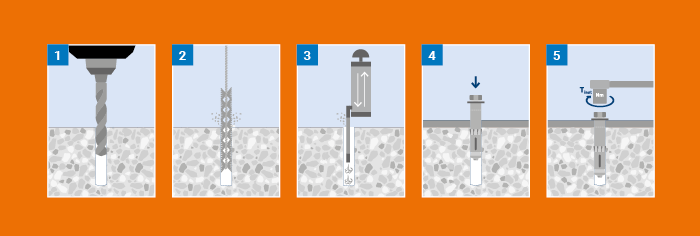
Drill the correct hole, clean it thoroughly, insert the anchor, and tighten to the specified torque. Always follow the manufacturer’s technical documentation for hole dimensions and torque values.