
















The Applications of Option One and Option Seven Undercut Anchors
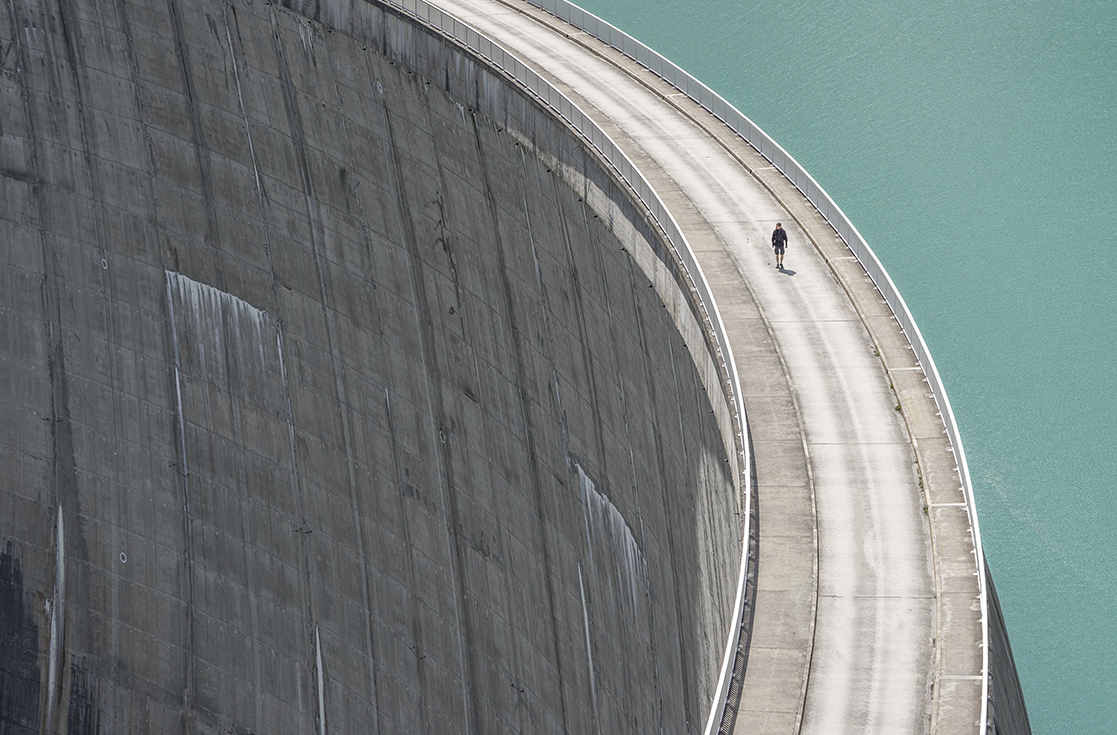
Undercut anchors are one of the strongest mechanical anchors you can find in the market. Hence they are used in high risk applications in such dangerous places as nuclear power plants, or in high loading applications such as roller coasters. In short, where risk to human safety as a result of anchor failure is high or where anchor failure has other catastrophic consequences.
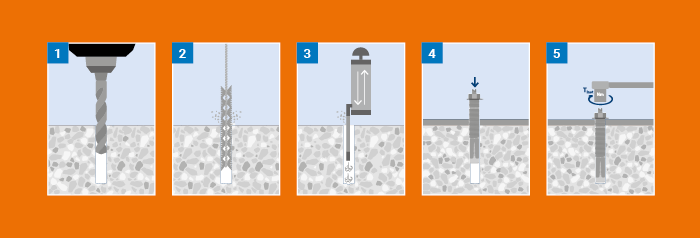
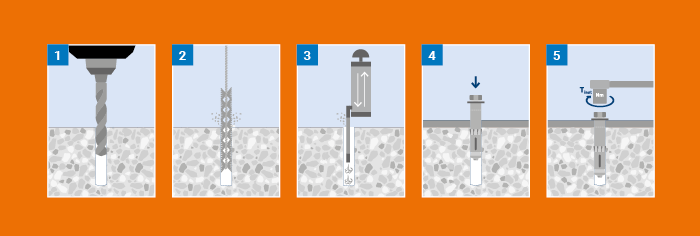
When installing the anchor, the expansion segments are safely driven drown inside the pre-drilled hole. The undercut is created via a spring action which automatically expands the undercut segments / undercut keys of the anchor in to the pre-cut void within the concrete. This is what is called the positive mechanical interlock (the undercut connection). It does this without causing any expansion pressure inside the concrete. This positive undercut mechanism, is what ensures the reliable transmission of action load from the application to the concrete wall, floor or ceiling.
Option One
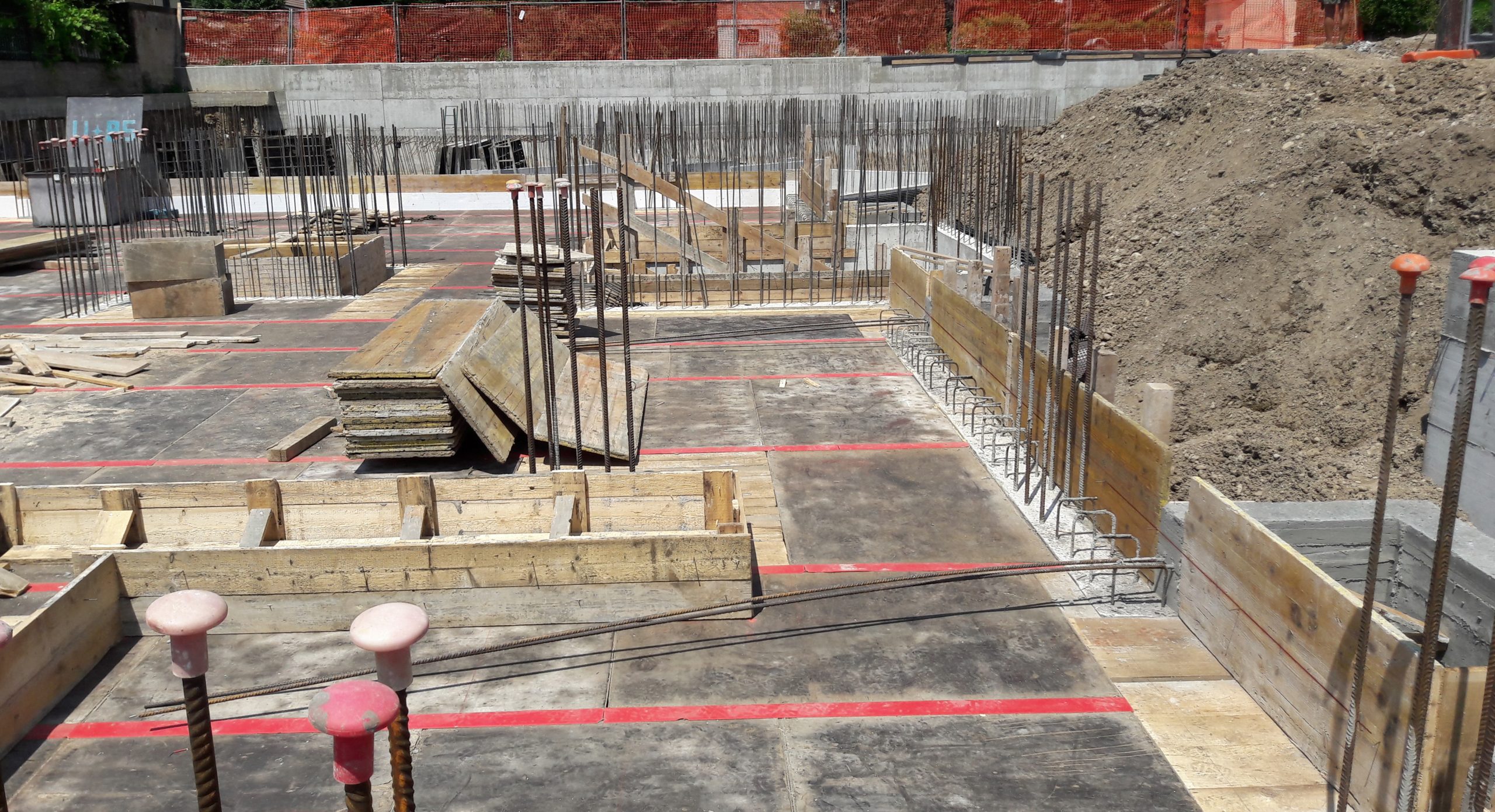
Undercut anchors are used in many ETA Option 1 application areas – option one being the designation for what is classed as the tension zone in a piece for concrete. This can be a concrete wall, concrete floor or concrete ceiling.
When we refer to tension zone we are referring to an area of the concrete which is or could become cracked. An anchor which as been successfully tested and approved to meet ETA Option 1 requirements means that it is suitable for use in those areas.
Option Seven
The many benefits associated with undercut anchors mean that their use is not just restricted to Option 1 areas of application. Many Option 7 areas of application still have requirements for ultra-high loads, close concrete edge distances and close anchor spacings. Option 7 being the ETA designation for the consideration of concrete which is not acting in tension and so is non-cracked.
Benefits of undercut anchors
• Undercut anchors are ultra-reliable and an easy fix / easy solution for high loads in non-cracked and cracked concrete
• There is an extra guaranteed safety due to positive undercutting mechanism
• The anchors are produced from high strength durable materials that offer additional guarantees of safety
• They are suitable in applications where there is a need to reduce the edge distances and anchor spacing in the concrete
When selecting anchors one should always consider their use and suitability to ensure that they have been assessed and approved for safe use by European Technical Approvals / Assessments, the board ensures that all anchors are tested and proved to be suitable for use in specific base materials and conditions.
Frequently Asked Questions
Q: What defines Option 1 and Option 7 undercut anchors?
Option 1 and Option 7 are ETA designations for undercut anchors, defining their suitability based on the condition of the concrete. Option 1 applies to cracked (tension zone) concrete, while Option 7 applies to non-cracked concrete.
Q: What is meant by the “tension zone” in Option 1 applications?
The tension zone refers to areas of concrete that are subject to stress and potential cracking, such as walls, floors or ceilings. Option 1 anchors are approved for use in these areas, where cracking may occur under load.
Q: Where are Option 7 undercut anchors typically used?
Option 7 anchors are used in non-cracked concrete applications, where the concrete is not acting in tension. They are particularly suitable for situations requiring close edge distances and tight anchor spacing.
Q: What performance characteristics do undercut anchors provide?
Undercut anchors offer a positive mechanical interlock, providing high reliability and secure load transfer in both cracked and non-cracked concrete. They are designed for ultra-high load applications and maintain performance under demanding conditions.
Q: What are the key benefits of using Option 1 and Option 7 undercut anchors?
Key benefits include high load capacity, suitability for tight installation conditions, and enhanced safety through the undercutting mechanism. They are also manufactured from durable materials and can be used where reduced edge distances and close spacing are required.